Content Hub / Explore
Cycling
Road cycling, mountain biking, BMX, or just cycling to school — it all counts. Cycling builds fitness, independence, and environmental awareness. It links to transport planning, sports coaching, sustainability, and bike mechanics.
Where this leads
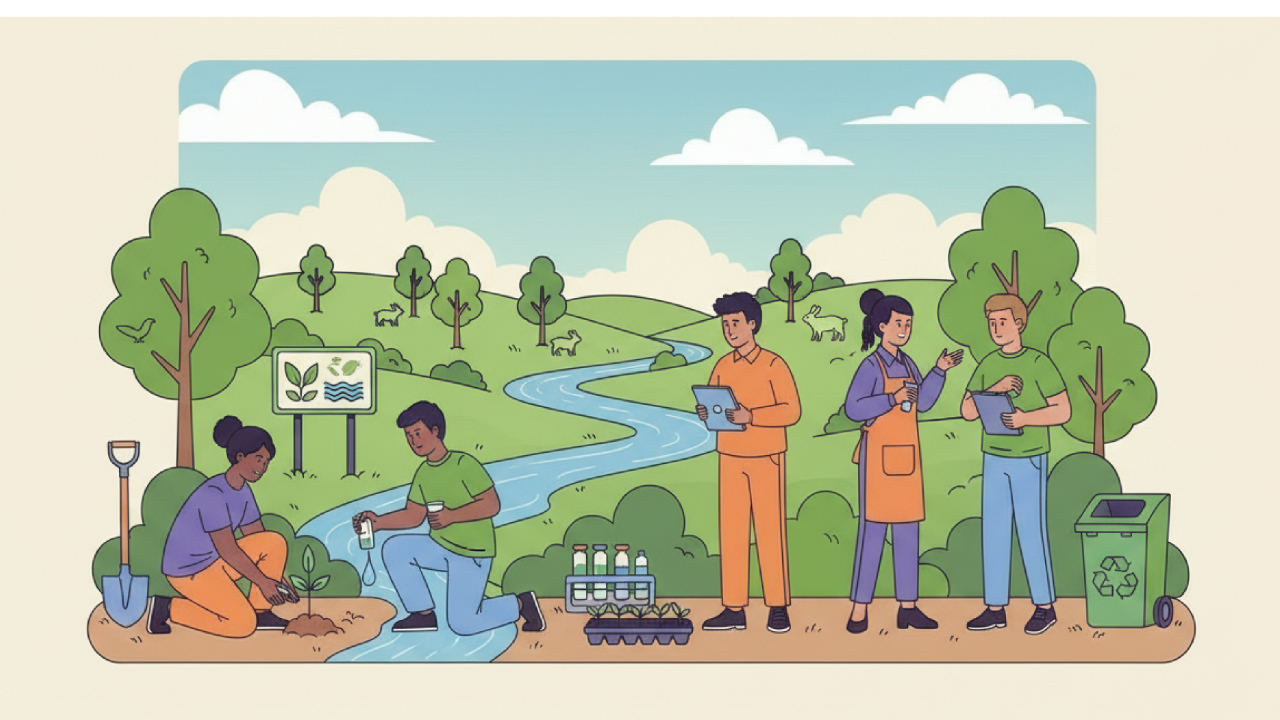
Environmental Services
Make a local impact in environmental services. Roles focus on sustainability, conservation, and community health—ideal for those passionate about protecting our planet and supporting local initiatives.
Health & Wellness
Support wellbeing in health & wellness roles. This sector values empathy, communication, and practical skills, with accessible pathways for all backgrounds to foster local health.
Sports & Leisure
Get active in sports & leisure, where teamwork, motivation, and leadership are celebrated. Accessible roles range from coaching to management, all supporting local wellbeing.
Transportation & Logistics
Keep things moving in transportation & logistics, where organization and teamwork matter. Accessible roles help local businesses deliver goods and services efficiently.
Cycling is about freedom, fitness, and self-propelled exploration. Whether it's commuting, racing, mountain biking, or casual riding, cycling builds physical resilience, independence, and environmental awareness. It connects to sports coaching, bike mechanics, transport planning, and competitive careers.
This page shows what cycling looks like in real life, what strengths it can build, and a few low pressure ways to try it, even if you've never thought of yourself as a "cyclist".
- Cycling to school or around your area, or wanting to start.
- Following professional cyclists, watching cycling documentaries or races.
- Being interested in bikes—how they work, different types, upgrades.
- Outdoor activities, enjoying speed, fitness, or being in nature.
- Mountain biking, BMX, or other cycling sports.
- Using cycling as transport, exploring how to bike safely or further.
- Noticing cycling culture, supporting local cycling clubs or community.
Cycling is a brilliant signal for people who enjoy independence, physical challenge, and moving through the world under their own power. It's accessible, affordable, and connects to environmental values, fitness, adventure, and community.
Budi treats cycling as a clue for resilience, independence, physical discipline, and environmental awareness. You're building fitness, mechanical understanding (if you maintain your bike), navigation and problem-solving skills, and the confidence that comes from physical capability.
- Build fitness and resilience, developing cardiovascular and muscular endurance.
- Learn mechanics and maintenance, understanding bike components, basic repairs, safety checks.
- Navigate and plan, finding routes, understanding distance and terrain, managing time and energy.
- Read conditions and adapt, responding to weather, traffic, terrain changes.
- Build confidence and independence, solving problems on the road, managing fear or discomfort.
- Engage with community, joining clubs, riding with others, supporting fellow cyclists.
- Physical resilience and fitness, building strength and endurance over time.
- Independence and problem-solving, managing on your own, fixing problems, adapting to challenges.
- Mechanical understanding, learning how bikes work, basic maintenance, troubleshooting.
- Navigation and spatial awareness, understanding routes, reading maps, planning efficiently.
- Perseverance and goal-setting, training for distance or speed, pushing through discomfort.
- Environmental awareness, understanding transport impact, reducing carbon footprint.
- Professional cycling
- Road racing, mountain biking, BMX racing, track cycling.
- Example roles: professional cyclist, team member, apprentice rider.
- Bike mechanics and retail
- Bike shops, repair workshops, maintenance specialists.
- Example roles: bike mechanic, apprentice mechanic, retail cyclist, sales advisor.
- Sports coaching and clubs
- Cycling clubs, youth cycling development, sports coaches.
- Example roles: cycling coach, club organiser, youth leader, mentor.
- Transport planning and advocacy
- Local government, cycling advocacy groups, sustainable transport planning.
- Example roles: transport planner, cycling officer, advocacy coordinator.
- Fitness and wellbeing
- Spin classes, fitness coaching, health and wellbeing programmes.
- Example roles: fitness instructor, health coach, exercise facilitator.
Easy start, 10 to 15 mins. Plan a short bike ride—to school, the park, or a nearby place. Check: your bike's condition (tyres, brakes, chain), your route, safety gear. Then ride and notice how you feel—fitness level, how your body responds, what you enjoy.
Medium, 30 to 45 mins. Learn one maintenance task—checking or pumping tyres, adjusting brakes, cleaning your chain. Watch a YouTube tutorial, gather tools, and practice. It's satisfying to know your bike is well-maintained.
Stretch, 1 to 2 hours. Do a longer bike ride—10 to 20 km if you're able, or your current distance + 50%. Plan your route, bring water and snacks, and notice how your fitness and confidence develop. Reflect: What's getting easier? What's still challenging? Would you do it again?
Cycling can act as a helpful signal for strengths like physical resilience, independence, mechanical understanding, navigation, perseverance, and environmental awareness. Budi combines this with other signals to suggest industries, role types, and next steps. It's not here to box anyone in; it's here to open up options they might not have seen yet.
Cycling is accessible in many forms. If balance is challenging, tricycles, cargo bikes, or specialist cycles exist. If you have limited leg mobility, hand cycles or e-bikes with assistance help. If you're blind or have low vision, tandem cycling with a sighted partner, or mobility aids, make cycling possible. If you have hearing loss, you can cycle safely with awareness; many cyclists are deaf or hard of hearing. Adaptive equipment, physiotherapy-supported training, and inclusive cycling groups exist for many disability types. The cycling community is increasingly inclusive; always ask about options.
Different approaches work in cycling—some people race competitively, others ride for fitness or transport, some enjoy casual exploration. All are valid cyclists.
- Physical Education & Sport, fitness, competition, outdoor activities, teamwork.
- Environmental Science & Sustainability, reducing carbon, clean transport, environmental impact.
- Engineering & Mechanics, understanding how bikes work, design, innovation.
- Geography, understanding routes, planning travel, understanding landscapes.
- Health & Wellbeing, fitness, mental health benefits, outdoor engagement.