Content Hub / Explore
Agriculture & Land-based Studies
Covers farming, land management, horticulture, and food production. Builds practical outdoor skills and environmental awareness — leading to careers in agriculture, estate management, conservation, and the growing agri-tech sector.
Where this leads
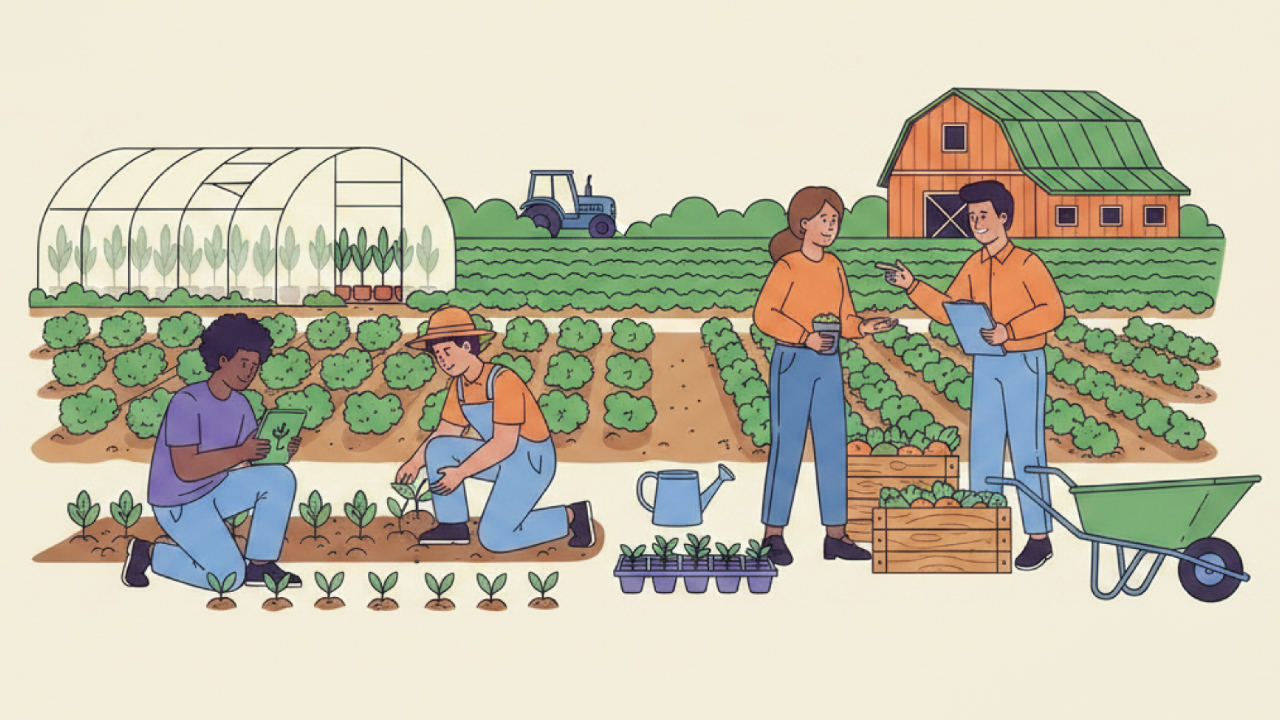
Agriculture
Explore opportunities in agriculture, from hands-on farming to agri-tech. This industry welcomes all backgrounds, focusing on sustainable growth and supporting local food systems across Hertfordshire, Essex, and Suffolk.
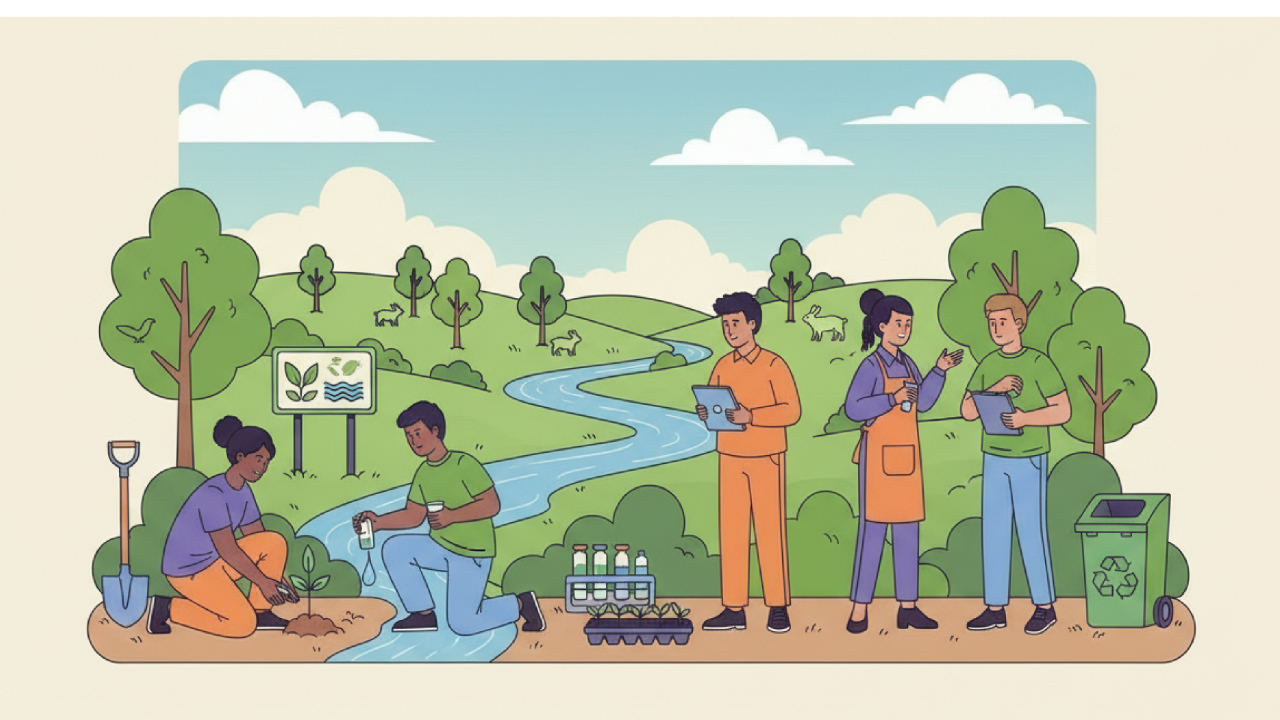
Environmental Services
Make a local impact in environmental services. Roles focus on sustainability, conservation, and community health—ideal for those passionate about protecting our planet and supporting local initiatives.
Food & Beverage
Explore food & beverage careers, from kitchens to supply chains. This industry values teamwork, adaptability, and a passion for quality, with roles that support local producers and communities.
Horticulture
Grow and care for plants in horticulture, where patience, practical skills, and attention to detail create real impact. From nurseries and landscaping to food growing and green spaces, it’s hands-on work with visible results.
Agriculture and land-based studies is about farming, growing food, managing land, and working outdoors. It can be farming, horticulture, estate management, conservation, or agri-tech. It builds practical skills, environmental awareness, problem-solving in variable conditions, and understanding how to work with living things and natural systems.
This page shows what agriculture and land-based studies looks like in real life, what strengths it can build, and a few low pressure ways to try it, even if you've never thought of yourself as a "countryside person".
- Growing food, gardening, allotments, or composting at home or school.
- Being drawn to the countryside, outdoor work, or working with animals.
- Playing farming games or simulation games about land management.
- Studying GCSE or A Level Agriculture, Environmental Science, or BTEC Agriculture.
- Work experience on farms, orchards, nurseries, or estates.
- Being interested in food sources, sustainable farming, or environmental issues.
- Enjoying outdoor activities—hiking, camping, or spending time in nature.
Agriculture and land-based studies is a brilliant signal for people who are practical, patient, and interested in natural systems. It's not just traditional farming; it's precision agronomy, organic farming, vertical farms, renewable energy on farms, and using technology to solve land management challenges.
Budi treats agriculture and land-based studies as a clue for practical problem-solving, environmental thinking, resilience, and technical skill. You're building knowledge of crop biology, soil health, animal welfare, machinery, and the business of producing food or managing land sustainably.
- Understand the land, soil health, water management, weather, and seasonal patterns.
- Plan and manage production, crop selection, planting schedules, rotation systems.
- Work practically, planting, tending crops, harvesting, maintaining equipment and infrastructure.
- Care for animals if applicable, feeding, health checks, welfare, breeding management.
- Manage risks, responding to pests, disease, weather, market changes.
- Understand the business, costs, yield, profitability, markets, regulations, grants.
- Practical and technical skills, using equipment, understanding land management, problem-solving.
- Environmental awareness and sustainability, understanding soil, water, biodiversity, climate impact.
- Resilience and patience, working through seasons, managing unpredictability, adapting to change.
- Business understanding, managing budgets, understanding markets, planning for sustainability.
- Independence and responsibility, managing land or animals, making decisions, reliability.
- Systems thinking, understanding how crops, soil, water, weather, and markets interconnect.
- Farming and crop production
- Arable farming, horticulture, fruit growing, vegetable growing, organic farming.
- Example roles: farm worker, crop technician, horticulturist assistant, apprentice farmer.
- Animal husbandry and breeding
- Livestock farming, dairy, poultry, horse breeding, equine management.
- Example roles: farm hand, livestock technician, stable assistant, animal technician.
- Forestry and woodland management
- Tree farming, woodland conservation, timber production, environmental management.
- Example roles: forester assistant, woodland technician, tree surgeon trainee.
- Land management and conservation
- Estate management, conservation, environmental restoration, land trusts.
- Example roles: land management technician, conservation worker, estate assistant.
- Agri-tech and innovation
- Precision farming, environmental monitoring, renewable energy on farms, research.
- Example roles: agri-tech technician, data assistant, environmental monitor.
Easy start, 10 to 15 mins. If you have a garden or access to one, observe the soil, plants, and wildlife. What's growing? What helps or harms it? How would you improve the space? If not, research a local farm or estate—what do they produce?
Medium, 30 to 45 mins. Grow something from seed or plant—in a pot, garden, or community allotment. Plan it: seed type, conditions needed, watering, sunlight. Care for it daily or weekly. Keep notes: How long until germination? Growth? Any problems?
Stretch, 1 to 2 hours. Visit a working farm, orchard, or estate if possible. Help with one task—planting, weeding, harvesting, animal care, maintenance. Ask workers about their day, what they enjoy, challenges, and how they got into it.
Agriculture and land-based studies can act as a helpful signal for strengths like practical skill, environmental awareness, resilience, business understanding, independence, and systems thinking. Budi combines this with other signals to suggest industries, role types, and next steps. It's not here to box anyone in; it's here to open up options they might not have seen yet.
Agriculture is accessible in many forms. If outdoor physical work is challenging, land management, agri-tech, business planning, conservation coordination, or environmental monitoring are brilliant alternatives using the same systems thinking and environmental knowledge. If you have mobility challenges, assistive equipment, raised beds, and modern machinery can help. If you're neurodivergent, the routines, structures, and pattern-recognition aspects of farming can be engaging. Seasonal work and remote farm work offer flexibility. Always discuss your access needs with employers or training providers.
Different approaches work in agriculture—some people are meticulous planners, others intuitive problem-solvers. Both produce brilliant harvests.
- Environmental Science, understanding ecosystems, climate, conservation, sustainability.
- Biology, understanding plant growth, animal biology, soil science, ecology.
- Geography, understanding land, climate, regions, environmental systems.
- Business & Enterprise, farm businesses, land management economics, markets.
- Apprenticeships, hands-on learning, practical skills, real responsibility and pay.