Back to Industry Hub

Industry Guide

Agriculture Careers for Young People

Explore opportunities in agriculture, from hands-on farming to agri-tech. This industry welcomes all backgrounds, focusing on sustainable growth and supporting local food systems across Hertfordshire, Essex, and Suffolk.

Agriculture: explore where it could take you

What the industry covers

Agriculture is about growing food, caring for land, managing crops and livestock, and using new technology to make farming more sustainable. Roles can be practical, outdoors, scientific, technical or business-focused.


What kind of people thrive here?

This kind of work is usually hands-on and practical, focused on sustainability and the environment and seasonal or varied in its hours. It can suit you if you like work that has a clear purpose, gives you room to grow, and connects your strengths to real tasks.

Technical Skills

You enjoy learning how tools, systems or equipment work.

Initiative

You are willing to get started, ask questions and take useful action.

Problem Solving

You stay curious and work through challenges step by step.

Communication

You can share ideas clearly and listen to other people.


Key industry insights

Look beyond the obvious employers

Local organisations, SMEs, charities, public bodies and specialist employers can offer valuable first steps, practical experience and clearer routes to responsibility.

Pay varies by role

Experience, responsibility, qualifications, employer and location all affect salary. Treat published figures as a guide rather than a guarantee.


How to start your agriculture career

  1. 1.Explore your strengths.

Think about whether you prefer creating, making, fixing, analysing, organising, supporting people or working with technology.

  1. 2.Research realistic pathways.

Look at apprenticeships, college courses, traineeships, volunteering, entry-level vacancies and local employers.

  1. 3.Build evidence.

Use school, college, work, volunteering or personal projects to show what you can already do.

  1. 4.Learn the language of the sector.

Read job descriptions, follow current developments and notice the skills employers mention repeatedly.

  1. 5.Apply before you feel perfect.

Employers do not expect beginners to know everything — they look for potential, reliability and willingness to learn.


Roles and career pathways

Where people often start

Opportunities are growing around sustainable farming, agri-tech, machinery, food production, farm operations, environmental work and local food supply chains. Practical experience, volunteering or seasonal work can help you get started.

Where it can lead

Agriculture is about growing food, caring for land, managing crops and livestock, and using new technology to make farming more sustainable. Roles can be practical, outdoors, scientific, technical or business-focused. With experience, you may move into specialist, supervisory, management, consultancy or leadership work depending on the pathway you choose.

What employers value

Helpful skills include practical skills, adaptability, resilience, understanding environmental impact and initiative. You do not need to be perfect at all of them straight away — these are strengths you can build through projects, volunteering, part-time work, courses, apprenticeships or simply practising.
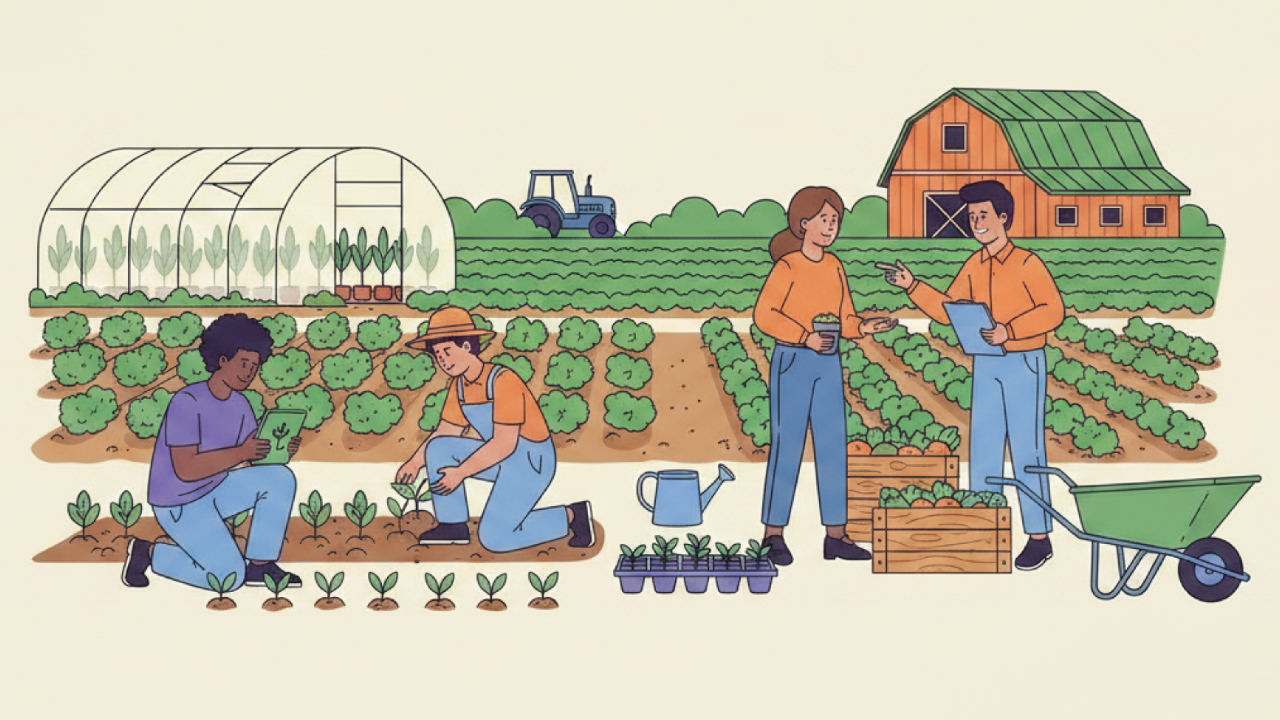

Skills employers value

Helpful skills include practical skills, adaptability, resilience, understanding environmental impact and initiative. You do not need to be perfect at all of them straight away — these are strengths you can build through projects, volunteering, part-time work, courses, apprenticeships or simply practising.

  • Technical Skills
  • Initiative
  • Problem Solving
  • Communication

Trends and useful preparation

Why this section matters

This field is changing. Showing that you understand what is happening — and that you are already taking small steps to prepare — can help you stand out.

Trends to watch

  • Market picture: Because agriculture is often seasonal and not always captured neatly in the vacancy data, it is better to read the trend as steady demand rather than a precise rise or fall.
  • Opportunity areas: Opportunities are growing around sustainable farming, agri-tech, machinery, food production, farm operations, environmental work and local food supply chains. Practical experience, volunteering or seasonal work can help you get started.
  • Things to be aware of: Things to be aware of: the work can be seasonal, weather-dependent and physically demanding, with changing costs and market pressures. It suits people who like practical work and can adapt when plans change.

Useful preparation

  • Show that you understand the work can be practical, seasonal and affected by weather.
  • Talk about reliability, resilience and any experience caring for plants, animals, equipment or land.
  • If you have helped outdoors, volunteered, grown food, worked with tools or supported a family/community project, use that as evidence.
  • Mention your interest in sustainability, food systems or agri-tech if relevant.

Your next step

You do not need to be a finished expert to belong in agriculture. Start with curiosity, build evidence through small experiences and explore the pathway that fits how you work best.