Content Hub / Explore
Content Creation & Vlogging
Love making videos, reels, or TikToks? Content creation teaches you storytelling, editing, branding, and audience engagement — skills that marketing teams, media companies, and brands are desperate for.
Where this leads
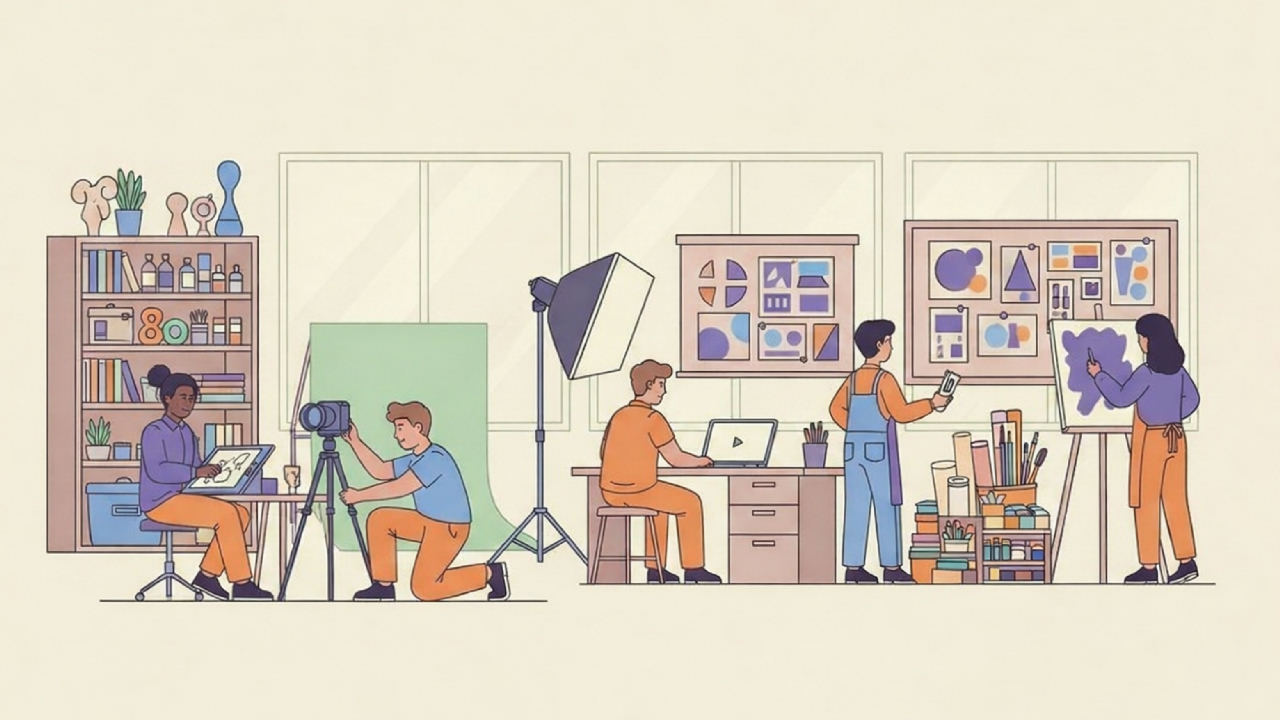
Creative Industries
Express your strengths in the creative industries—arts, design, media, and more. This sector champions fresh ideas, inclusivity, and authentic self-expression, with accessible roles for every talent.
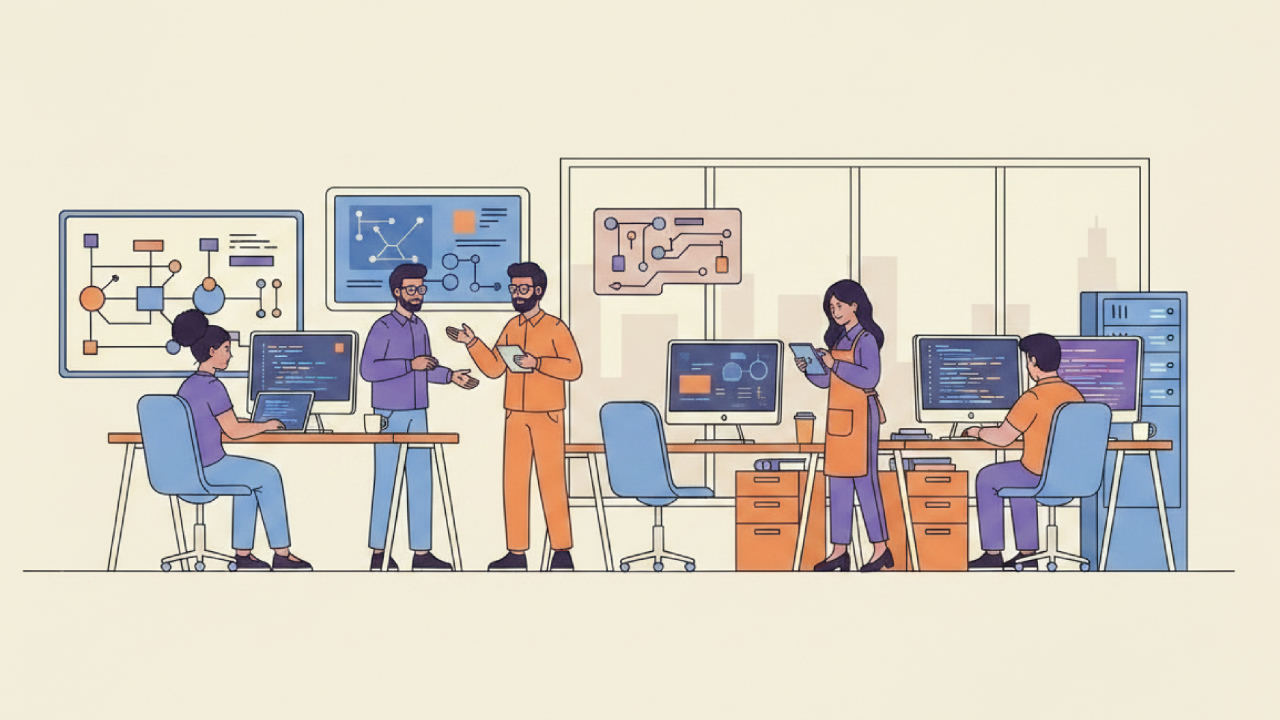
Digital & Tech
Digital and tech careers are perfect for curious, adaptable problem-solvers who love working with technology and new ideas. Whether you’re interested in coding, design, IT support, or digital innovation, this sector values creativity, teamwork, and a drive to keep learning.
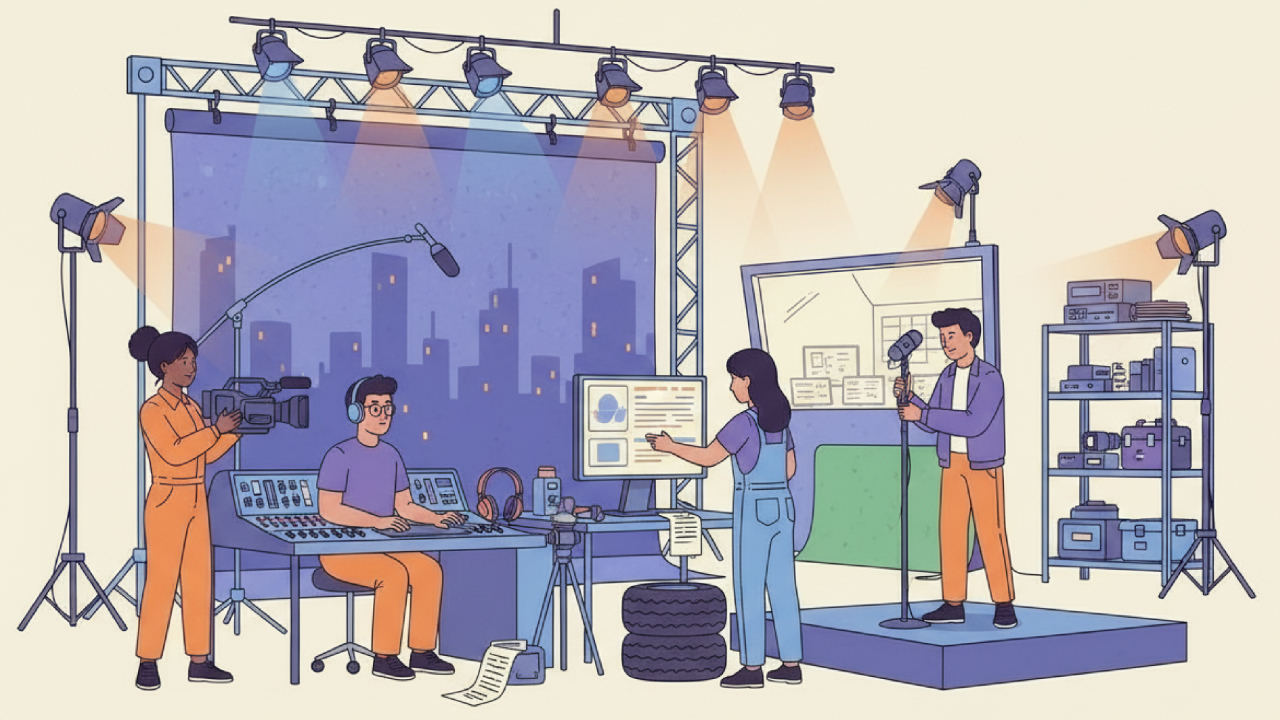
Entertainment & Media
Step into entertainment and media, where creativity and collaboration are celebrated. From production to digital content, this industry values real-world skills and diverse perspectives.
Freelance
Build your freelance career with strengths-first support. Whether creative or technical, freelancing offers flexible, accessible opportunities to grow your skills and serve local clients.
PR & Communications
Shape stories, build brands, and connect with audiences. PR and communications offers creative, fast-paced careers for young people who love writing, strategy, and making an impact through words.
Publishing
Bring stories and ideas to life in publishing, where creativity meets detail. Explore roles in editorial, design, marketing, and production, with clear entry routes for young people.
Retail & Consumer Goods
Build your career in retail & consumer goods, where people skills and adaptability shine. Accessible opportunities support local businesses and drive community connections.
Whether you're drawing in a sketchbook, experimenting with digital art, or studying figure drawing, drawing and illustration develop observation, fine motor control, and the ability to translate what you see (or imagine) onto a surface. It's not just about making pretty pictures — it's about understanding how to communicate visually.
- Drawing regularly in a sketchbook or journal
- Studying anatomy, perspective, or drawing techniques
- Experimenting with digital art tools and tablets
- Creating illustrations for projects, fanart, or personal expression
- Taking life drawing or observational drawing classes
- Combining drawing with other interests (character design, comics, graphic novels)
- Following artists and studying their work
- Participating in drawing challenges or communities online
Drawing and illustration interest is a strength signal because it demonstrates observation, visual communication, and the discipline to develop a genuine skill. When you draw, you're training yourself to truly see — to notice proportions, light and shadow, gesture, and detail. This observational capacity transfers to every visual field, from design to architecture to photography. Drawing also teaches you that skill develops through practice and that failure (wobbly lines, proportions that don't work) is part of the learning process. You're developing visual literacy and the ability to translate internal vision into external reality.
- Observing and translating what you see onto paper with accuracy
- Understanding anatomy, proportion, and perspective
- Mastering different drawing media (pencil, charcoal, ink, digital)
- Developing line control and mark-making skill
- Understanding light, shadow, and how to create depth
- Building a consistent drawing practice
- Studying reference material and learning from other artists
- Iterating and refining drawings based on feedback
- Observation: You notice detail most people miss
- Visual communication: You can express ideas visually
- Persistence: You draw badly at first and keep going
- Technical skill: Your hands develop capability through practice
- Attention to detail: You refine work obsessively
- Imagination: You translate internal vision into reality
- Understanding of composition: You know how to arrange elements effectively
- Confidence: You develop trust in your creative vision
- Fine art and illustration: Artists create work for galleries, publications, and personal expression
- Graphic design and branding: Designers combine illustration with communication
- Animation and motion graphics: Animators draw the foundations of moving images
- Comic books and graphic novels: Artists create sequential narratives
- Concept art and game design: Concept artists visualise ideas for games, film, and media
- Fashion design: Designers sketch garment ideas and design concepts
- Storyboarding and film production: Artists visualise scripts before filming
- Children's book illustration: Illustrators create the visual experiences of childhood
- Tattooing and body art: Artists create permanent visual expression on living canvas
- User interface and experience design: Designers sketch interactions and visual interfaces
Easy start: Pick up a pencil and sketchbook. Spend 15 minutes drawing something in front of you — a cup, your hand, a plant. Don't worry about it being good; focus on observation. How would you describe the shape? How does light hit it?
Medium: Commit to a drawing practice. Follow a structured course (YouTube has thousands) and draw regularly. Pick a focus area (anatomy, perspective, character design) and study it deliberately. Join online art communities and share your work for feedback.
Stretch: Develop a distinctive illustrative style. Create a body of work — a sketchbook's worth or a series of finished pieces — that shows your growth and voice. Consider how your drawing might be useful: illustrations for stories, character design, concept art. Think about how your visual voice could be valuable.
When we see drawing and illustration interests, we're noting visual literacy, observation, and the discipline to develop skill through practice. We're looking for evidence that you can translate ideas visually and that you embrace the iterative nature of creative work. These skills signal readiness for careers in design, animation, fine art, illustration, and any field requiring visual communication and creative problem-solving.
Drawing can be adapted for various abilities. If you have mobility limitations, adaptive pencil grips, tilted drawing boards, or digital drawing tablets with accessible interfaces exist. If you're blind or have low vision, tactile drawing and sculpting, or audio feedback from digital tools can help you experience drawing. If you're deaf or hard of hearing, drawing is a visual practice naturally suited to you. If you have ADHD or anxiety, the meditative, focused nature of drawing can be grounding. If you're neurodivergent, the detailed, systematic observation drawing requires might align perfectly with how your mind works. Many accomplished artists work around disabilities — your particular way of engaging with drawing is valid and might reveal things others miss.
- Graphic design and visual communication (applying drawing to design)
- Photography and visual storytelling (capturing rather than creating images)
- Animation and digital art (drawing that moves)
- Fashion and textile design (applying visual creativity to clothing)
- Architecture and spatial design (drawing three-dimensional spaces)
- Art history and criticism (understanding visual culture)
- Sculpture and three-dimensional art (creating beyond the flat plane)