Content Hub / Explore
Languages / Classics)
Covers Latin, Ancient Greek, and classical civilisation — exploring the languages, literature, and ideas that shaped the modern world. Builds exceptional analytical, translation, and critical thinking skills prized in law, academia, and communications.
Where this leads
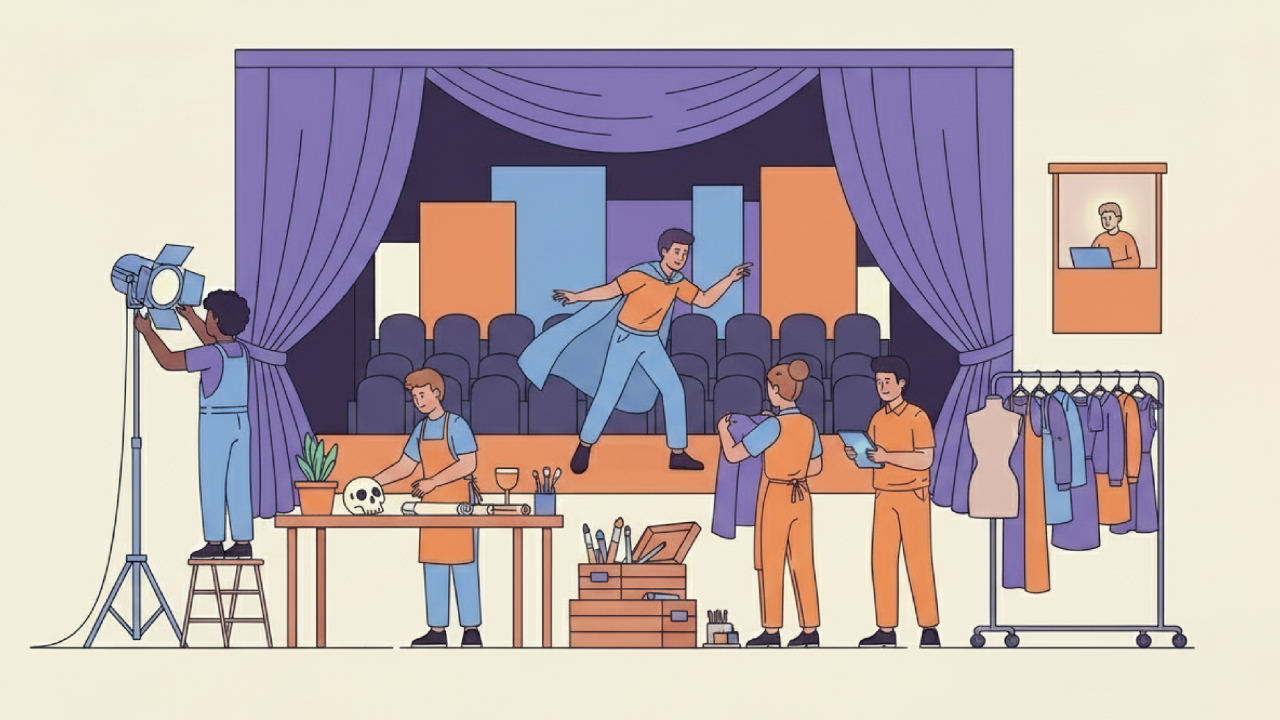
Arts & Culture
Bring ideas to life and shape how people experience the world. Arts and culture careers reward creativity, passion, and the courage to express yourself — with growing opportunities in digital, live events, and community programmes.

Education
Shape the future in education, supporting learners of all ages. Whether you’re organized, empathetic, or a great communicator, there’s a place for your strengths in schools, training, and community learning.

Entertainment & Media
Step into entertainment and media, where creativity and collaboration are celebrated. From production to digital content, this industry values real-world skills and diverse perspectives.
Law & Legal Services
Find your place in law & legal services, supporting fairness and justice. This sector values analytical thinking and communication, with accessible roles for diverse skill sets.
Languages and Classics is about exploring the ancient world—Latin, Ancient Greek, classical civilisation—and building extraordinary analytical, translation, and critical thinking skills. It can lead to law, academia, archaeology, diplomacy, or any field that values deep research and precise communication. It builds confidence in argument, pattern recognition, and an understanding of how language shapes thought.
This page shows what languages and classics looks like in real life, what strengths it can build, and a few low pressure ways to try it, even if you've never thought of yourself as a "language person".
- Reading mythology, ancient history, or classical literature for pleasure.
- Noticing Latin and Greek roots in everyday words, spotting patterns in language.
- Playing word games, crosswords, or etymology challenges.
- Studying GCSE or A Level Classics, Latin, or Classical Civilisation.
- Being curious about how ancient societies worked, law, philosophy, or politics.
- Enjoying detective work—piecing together clues in texts, finding hidden meanings.
- Learning other languages and noticing how different languages structure ideas.
Languages and Classics is a brilliant signal for people who love patterns, precision, and ideas that have lasted millennia. It's not dusty or dead; it's about understanding the foundations of law, science, medicine, and democracy. Studying ancient languages and texts builds the kind of analytical mind that excels in law, research, and any work that demands clarity and rigour.
Budi treats languages and classics as a clue for deep thinking, precision, intellectual curiosity, and the ability to argue a point clearly. You're building skills in translation, interpretation, debate, and understanding how language shapes power and meaning.
- Decode languages, learning grammar, vocabulary, and syntax systematically.
- Translate accurately, balancing literal meaning with style and context.
- Analyse texts, spotting rhetoric, identifying author intent, and interpreting ambiguity.
- Research and contextualise, understanding history, culture, and the world behind the texts.
- Argue and debate, supporting claims with evidence from primary sources.
- Connect ideas across time, seeing how ancient thinking echoes in modern problems.
- Analytical thinking and logical reasoning, breaking arguments into premises and conclusions.
- Precision and attention to detail, understanding how a single word changes meaning.
- Pattern recognition, spotting rules, exceptions, and linguistic structures.
- Research skills and intellectual curiosity, diving deep into questions.
- Argumentation and persuasion, making evidence-based claims clearly.
- Cultural awareness and empathy, understanding different worldviews across time.
- Law and justice
- Solicitor, barrister, legal researcher, policy work, human rights.
- Example roles: trainee solicitor, legal intern, paralegal, policy researcher.
- Academia and research
- University lecturing, research, archaeology, manuscript studies.
- Example roles: research assistant, museum curator, archaeologist, academic.
- Publishing and media
- Editing, fact-checking, translation, content creation for cultural organisations.
- Example roles: editor, copy editor, translator, heritage content creator.
- Diplomacy and international relations
- Foreign Office, international organisations, cultural diplomacy.
- Example roles: diplomatic officer, researcher, language specialist.
- Business and professional communication
- Technical writing, business communication, copy editing, corporate research.
- Example roles: technical writer, business analyst, communications manager.
Easy start, 10 to 15 mins. Pick a word you use every day (educate, democracy, philosophy, museum). Look up its Latin or Greek root and trace how it's changed meaning. Find three other words with the same root.
Medium, 30 to 45 mins. Read a passage from a classical text (Ovid, Aristotle, Livy, or a modern translation if you prefer). Write down 5 observations: What's the main argument? Who is the audience? What language does the author use to persuade? What would you challenge or add?
Stretch, 1 to 2 hours. Find a translation of a classical text you're curious about. Compare two different translations of the same passage. Which choices did each translator make? Which feels more accurate or beautiful to you?
Languages and Classics can act as a helpful signal for strengths like analytical thinking, precision, intellectual curiosity, argumentation, and research skills. Budi combines this with other signals to suggest industries, role types, and next steps. It's not here to box anyone in; it's here to open up options they might not have seen yet.
If learning ancient languages feels daunting, start with mythology or history in translation. You can build the same analytical skills through reading, discussion, and debate. If reading is challenging, audiobooks, podcasts, and video lectures on classics are brilliant alternatives. If you use a screen reader or magnification, many university resources and heritage sites offer accessible versions of classical texts.
Different learning styles work here—some people memorise and recite, others prefer analysis and debate. Both are valuable ways to engage with these ideas.
- English (Language & Literature), textual analysis, writing, interpretation.
- History, understanding the past, research, contextual thinking.
- Philosophy & Ethics, ideas, reasoning, exploring big questions.
- Modern Foreign Languages, linguistic patterns, cultural understanding.
- Law & Criminology, argument, justice, precise communication.