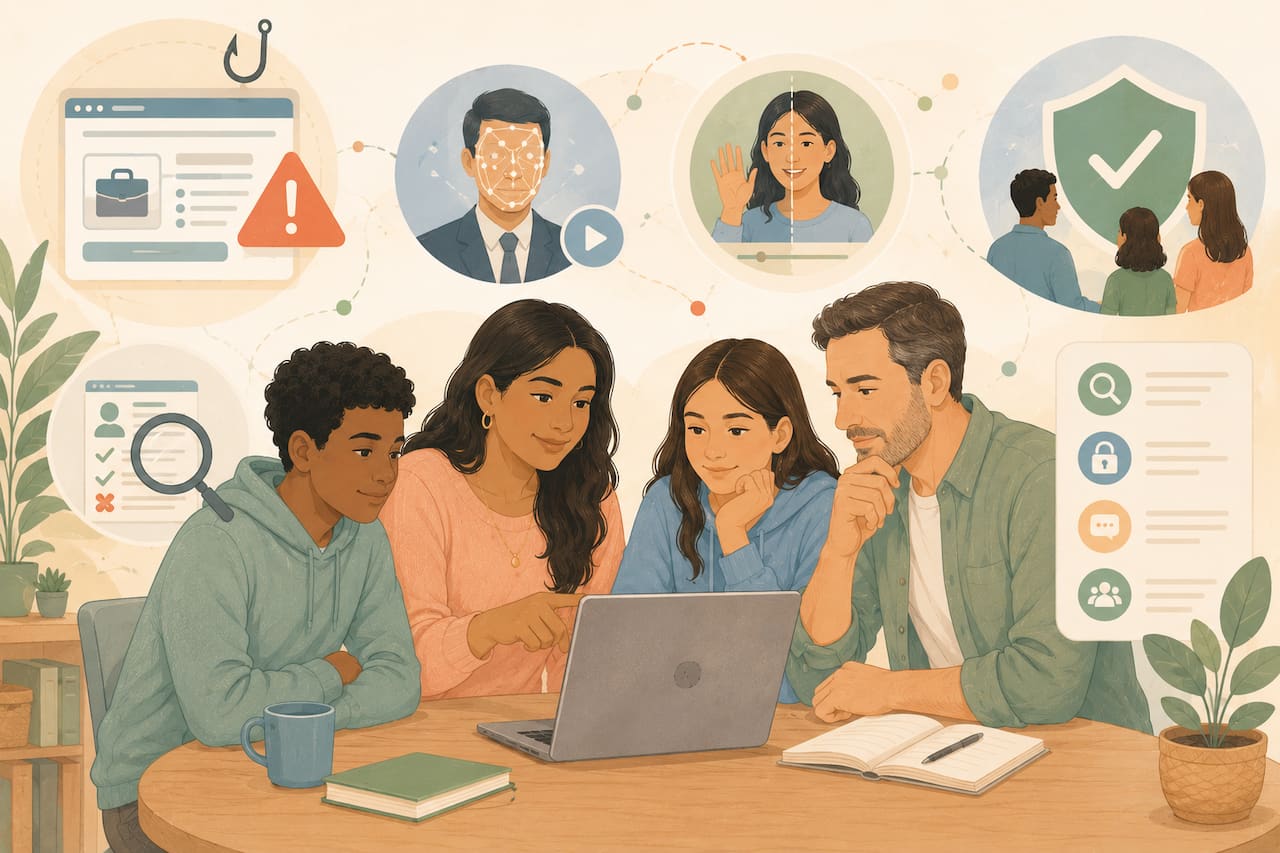
Fake job ads and deepfakes, a safety guide for families
Job scams are getting more convincing, and AI is part of why. This guide shares the red flags to look for, what to check before a young person applies, and what to do if something feels off. It is calm, practical, and built to reduce panic and shame.
Written by: Frankie Brookton, Founder, inyourroots®
Scams have always existed. What’s changed is how convincing they can look.
AI makes it easier to create fake websites, fake emails, and even fake people. That can be scary, but the goal is not panic.
The goal is simple: help young people apply safely, without shame.
Why scams are getting more convincing
Scammers can now:
- write professional-looking job ads quickly
- copy real company branding
- create fake recruiter profiles
- send believable messages at scale
Some scams are about money. Others are about personal data. Some are about control.
Red flags checklist
A job ad or message is more likely to be fake if:
- pay is unusually high for very little work
- the company is hard to verify online
- they rush you, pressure you, or create urgency
- they ask for personal documents too early
- they move you to WhatsApp or Telegram immediately
- the email address does not match the company domain
- the job description is vague, copy-paste, or full of errors
One red flag doesn’t always mean it’s a scam. Several together is a strong warning.
What to check before applying (2-minute safety check)
- search the company name and check the official website
- verify the email domain and contact details
- look for a real address and a real phone number
- if in doubt, call the company using the number on their official website
- if relevant, check Companies House
If a role is real, a legitimate employer will not be offended by basic checks.
If something feels off, what to do next
If you suspect a scam:
- stop replying
- do not send documents or money
- take screenshots
- report it on the platform where you saw it
- if money or identity details were shared, get advice quickly
The most important thing is to avoid blame. Shame is what scammers rely on.
How to talk about it (without panic or shame)
Try:
- “Scammers are getting smarter. It’s not your fault.”
- “Let’s check it together, just to be safe.”
- “Being careful is a strength, not paranoia.”
You want young people to come to you early, not hide it.