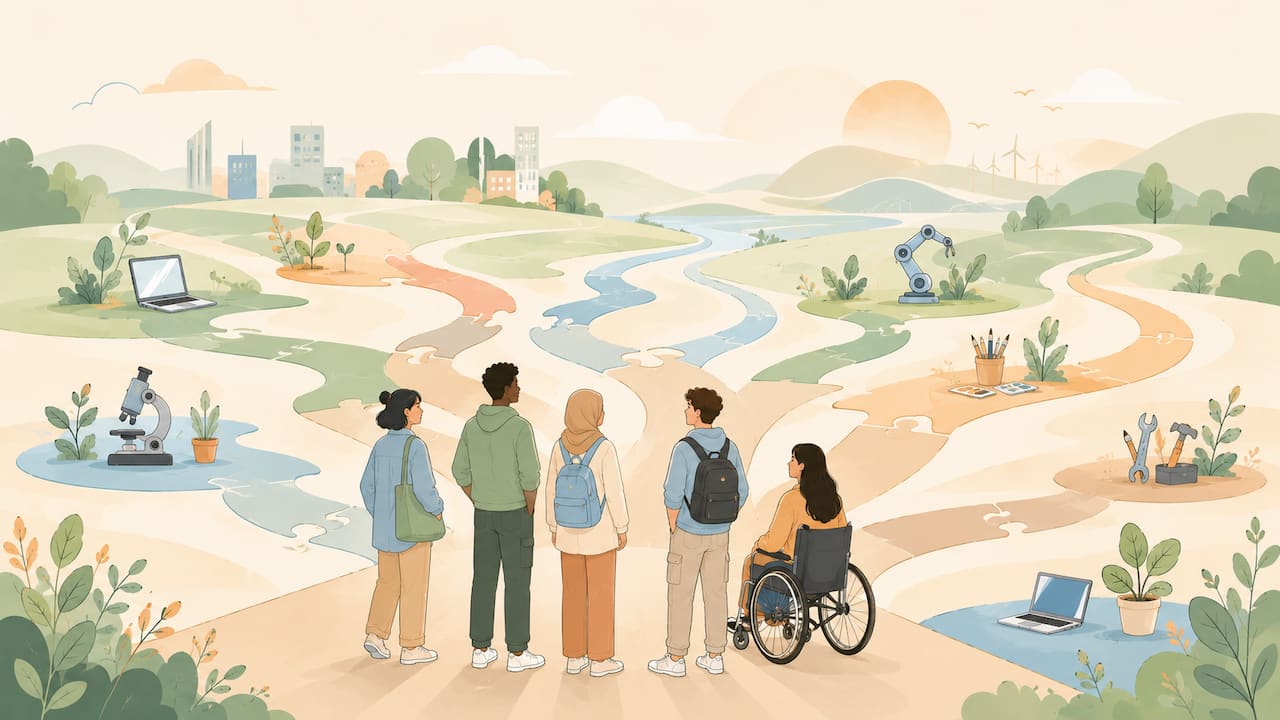
First chances in a changing job market
Entry-level work is changing, and too many young people are getting stuck before they even get started. This guide explains what is happening in plain English, including NEET and youth unemployment, what is changing in hiring, and what helps most. It also gives practical next steps for young people (16–25), SMEs, and parents and educators.
This guide is for:
- Young people (16–25): understand what is changing, then take one small step that builds momentum
- SMEs: create fair entry-level routes in, and hire for potential without perfect CVs
- Parents and educators: support without pressure, and keep routines and confidence steady
The gap is not talent. It’s connection.
Across the UK, more young people are getting stuck before they even get started. Some are actively looking for work and not finding it. Others are not in work or education at all, and they’re quietly drifting further away from opportunity.
At the same time, hiring is changing. More applications. More automated screening. Less feedback. Fewer “first rung” roles where you can learn on the job.
This guide makes it simpler. It pulls together what the numbers are telling us, what’s changing in entry-level work, and what helps most:
- for young people
- for small businesses
- for parents, educators, and the adults who support them
What “first chances” really means
A first chance isn’t a perfect job. It’s a real starting point.
- A role where you can learn without being judged for not already knowing everything
- A manager who gives clear expectations and fair feedback
- A route in that doesn’t rely on polish, confidence, or a perfect CV
- A workplace that is safe, supportive, and human
When first chances are available, young people build momentum. When they aren’t, the gap grows.
In plain English: a first chance is a starting point with support, not a test you either pass or fail.
The UK picture: unemployment, NEET, and disconnection
You’ll see two phrases in the headlines:
- Youth unemployment: young people who aren’t working, but are actively looking for work
- NEET: young people not in education, employment, or training
Both matter. NEET is often the bigger warning sign, because it can point to longer-term disconnection.
Want the full context and sources? Start here:
What’s changing in hiring (including AI)
Hiring has become more remote and more automated.
That can help employers manage volume. But it can also create an application “black hole” for first-time job seekers.
If you’ve never had a job before, you often don’t have:
- the keywords an automated system expects
- a CV that looks like everyone else’s
- confidence in interviews
- someone to tell you what to improve
AI is part of this shift.
Used well, it can remove admin, widen access, and help people learn faster. Used badly, it can narrow opportunity, hide bias, and make hiring feel like a locked door.
Evidence + practical guidance
What helps young people most
Young people don’t need more pressure. They need clearer routes.
The biggest unlocks are often simple:
- Strengths first: start with what someone is good at, not what they haven’t done yet
- Proof over polish: small projects, examples, and work samples beat a perfect CV
- Practice: interview practice, workplace confidence, and realistic expectations
- Support: one encouraging adult can change the whole direction
- Offline momentum: real-world activity that builds confidence, routine, and connection
This is why inyourroots® is designed to encourage offline action, not endless scrolling.
What SMEs can do (fair routes in)
If you run a small business, you can be someone’s first yes.
Not by lowering the bar, by making the route in clearer, kinder, and more practical.
You do not need a huge HR team to hire well. You need a fair process, a role that is truly entry-level, and a way to spot potential without perfect CVs.
Start here (10 minutes)
inyourroots.com
inyourroots.comThen read
inyourroots.com
inyourroots.comWant to be part of the first-chance directory?
We are building a verified employer directory for fair entry-level routes in across Essex, Hertfordshire, and Suffolk.
[Register interest for early access](https://inyourroots.com/your-register-url)What parents and educators can do (support without pressure)
Support is most powerful when it is calm and practical.
- Help them name their strengths, not just their grades
- Encourage small, real steps, one application, one call, one visit, one practice run
- Keep routines steady, especially if confidence is low
- Talk about online safety, including fake job ads and scams
Helpful next reads
If you want the evidence pack and practical guidance, go here:
Before you go
If this page helped, do not try to fix everything at once.
Entry-level work is noisy right now. The best next step is usually the smallest one that creates momentum, one message, one practice run, one visit, one draft, one conversation.
When you are ready, pick the path that fits you below.
Start here: your next step
Choose the path that fits you.
If you’re 16–25
Build proof of what you can do, and find roles that fit your strengths.
If you’re an SME
Create a fair first step into work, and hire for potential.
If you’re not sure where to start
Pick one small action today: one message, one application, one conversation, one practice run.
If you’re a parent or educator
Support without pressure, and help them take one real step at a time.