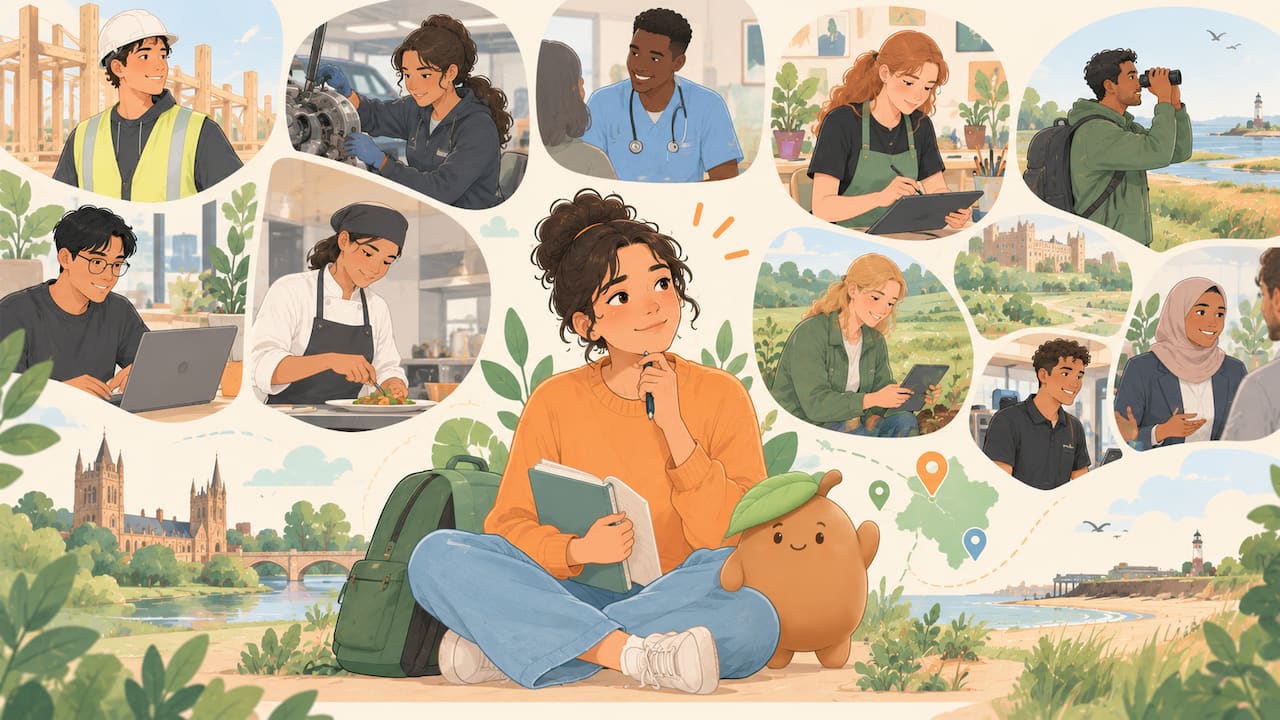
Still working out what job might suit you? You’re not behind.
You’re learning what gives you energy, what drains it and what kind of work feels manageable.
These ten day-in-the-life career ideas cover roles you can find across Essex, Hertfordshire and Suffolk. Each story shows how different strengths and working styles can appear on the job. You won’t need a perfect CV or years of experience to start exploring.
How to use this guide
Pick the day that feels most like you, or the one that surprises you. Notice the tasks you would enjoy, the conditions you would avoid and the kind of day that gives you energy.
If you want help turning those clues into options, try inyourroots® career discovery with Budi. It starts with your strengths and works with real life, including different communication, energy and sensory needs.
1. Junior creative digital content producer
A typical morning: You start by checking what people are watching and talking about. You’re looking for patterns: what’s working, what’s falling flat and what your audience cares about.
What you’ll do: Plan and make short videos, photos, captions and simple graphics. Some days involve filming or editing. On others, you’ll organise content so files, versions and deadlines don’t become a mess.
Strengths you’ll use: Visual thinking, storytelling, spotting when something feels off and turning a rough idea into something clear.
What may be difficult: Feedback can be blunt and deadlines can be tight. You’ll need a system for tracking files, changes and approvals.
How to start locally: Look for junior roles with creative agencies, local brands, hospitality groups, gyms and charities. A short portfolio of work often tells an employer more than a polished CV.
Do you notice trends before other people do? Do you enjoy making something, reviewing it and improving it?
2. Trainee sustainable agriculture technician
A typical morning: You’re outside early and can see the results of your work rather than spending the whole day in email.
What you’ll do: Support farm or land operations using sensors, basic data checks, soil and crop monitoring and equipment care. You’ll help solve problems when weather, machinery or growing conditions change.
Strengths you’ll use: Practical thinking, steady concentration, attention to detail and care for the environment.
What may be difficult: Weather changes plans. Some tasks are repetitive and progress can take time, so patience matters.
How to start locally: Suffolk has a strong agriculture and land-based sector. Search for trainee, apprentice or seasonal roles that can lead to longer-term training.
Do you prefer practical work that you can see and measure? Do you feel more settled outdoors than in busy indoor spaces?
3. Junior small-business operations coordinator
A typical morning: You arrive and quickly spot what needs sorting. People rely on you to keep work moving.
What you’ll do: Help with bookings, stock, supplier emails, invoices and schedules. You’ll also handle the unexpected tasks that appear during a busy day.
Strengths you’ll use: Organisation, people skills, switching between tasks and staying patient under pressure.
What may be difficult: Interruptions are common. You’ll need clear priorities, sensible boundaries and a reliable task system.
How to start locally: Hertfordshire has thousands of SMEs. Search for operations assistant, office administrator, coordinator and business support roles.
Do you like keeping things on track? Would you rather have a varied day than repeat the same task for hours?
4. Entry-level technology support specialist
A typical morning: Something has stopped working and you want to know why. You stay curious rather than panicking.
What you’ll do: Help people with password resets, device setup and software problems. You’ll log support tickets, explain each step clearly and keep users updated.
Strengths you’ll use: Analytical thinking, patience, calm problem-solving and clear communication.
What may be difficult: Some issues are repetitive and frustrated users may take their stress out on you. You’ll need to stay professional without taking it personally.
How to start locally: Schools, care providers, logistics companies and local businesses all need technology support. Certifications can help, but employers also value clear explanations and a good attitude.
Do you enjoy solving problems one step at a time? Can you explain technology without making someone feel silly?
5. Community engagement assistant
A typical morning: You check messages and see what local people need. You enjoy working with others and want your work to mean something.
What you’ll do: Help plan events, write updates, answer questions and build relationships with community groups. You might support youth projects, public services or local campaigns.
Strengths you’ll use: Empathy, planning, relationship-building and helping people feel included.
What may be difficult: You can’t help everyone at once. Protecting your time and energy is part of doing the job well.
How to start locally: Look at councils, charities, community hubs and education providers. Volunteering can give you useful experience and local contacts.
Do you care about helping people feel heard? Do you enjoy organising activities that bring people together?
6. E-commerce operations assistant
A typical morning: You check what sold, which orders are delayed and what customers are asking. The feedback is immediate.
What you’ll do: Help run an online shop by processing orders, checking stock, updating product listings and responding to returns and customer messages. You may also prepare simple reports.
Strengths you’ll use: Digital confidence, accuracy, systems thinking and spotting patterns.
What may be difficult: Errors with stock, orders or addresses can cost money. You’ll need to check details carefully, even when work is busy.
How to start locally: Many SMEs sell products online, from clothing and food to handmade goods. Search for e-commerce assistant, warehouse administrator and customer operations roles.
Do you like finding where a process has gone wrong and fixing it? Do tidy lists, tracking and completed orders feel satisfying?
7. Trainee green-energy installation technician
A typical morning: You’re moving, working with a team and learning by doing.
What you’ll do: Support the installation of solar panels, heat pumps, EV chargers or insulation. You’ll prepare sites, carry equipment, follow safety procedures and take on more technical work as your skills grow.
Strengths you’ll use: Practical learning, concentration, problem-solving and pride in doing a job properly.
What may be difficult: Expect early starts, physical work and travel between sites.
How to start locally: Search for trainee installer, apprentice and installer’s mate roles. Employers with good training will explain how your responsibilities and qualifications can progress.
Do you learn better through practice than reading? Do you like seeing a finished result at the end of the day?
8. Digital marketing assistant
A typical morning: You have ideas, but you also want to know which ones work.
What you’ll do: Support social posts, emails, simple graphics, website updates and basic reporting. Your campaigns might promote a gym, café, care provider, builder or shop.
Strengths you’ll use: Creativity, curiosity, communication and noticing what people respond to.
What may be difficult: Some workplaces expect constant posting without a clear plan. You’ll need priorities and enough time to check the results.
How to start locally: SMEs across Essex, Hertfordshire and Suffolk often need marketing support without having a large team. A focused portfolio and willingness to learn can help you get an interview.
Do you enjoy testing ideas and checking the response? Would you like work that combines creativity with some data?
9. Entry-level healthcare support worker
A typical morning: You show up for people. You’re steady, caring and likely to notice when someone needs help.
What you’ll do: Support patients or residents with everyday care, meals, comfort, mobility and routines. You’ll work with nurses and other colleagues and keep accurate records.
Strengths you’ll use: Empathy, patience, attention to detail and reliability.
What may be difficult: The work can be physically and emotionally demanding. Good training, supportive colleagues and enough recovery time matter.
How to start locally: Care providers and NHS services recruit across all three counties. Search for care assistant, support worker and NHS entry routes. Ask about supervision, training and progression before accepting a role.
Do you feel proud when you help someone have a better day? Can you stay steady when things become intense?
10. Junior hospitality experience coordinator
A typical morning: You like energy, enjoy welcoming people and can read the room.
What you’ll do: Help coordinate bookings, events and guest communication. You’ll solve problems on the day and work with colleagues to make each visit run smoothly.
Strengths you’ll use: People skills, quick thinking, teamwork and staying calm when plans change.
What may be difficult: Busy shifts, weekend work and difficult customers come with the job.
How to start locally: Suffolk and Essex have strong tourism, events and hospitality sectors. Search for guest services, events assistant, front-of-house coordinator and venue roles.
Do you enjoy active days with plenty to do? Can you stay calm and helpful when a plan changes at the last minute?
Which days felt most like you?
Choose your top three. Write down the tasks, surroundings and working styles that appealed to you. Look for patterns rather than forcing yourself to pick one job immediately.
You only need a direction that fits how you work now. You can change it as you learn more.
If you want help turning your strengths into realistic options, start career discovery with Budi. It’s designed for 16 to 25 year olds, including neurodivergent young people, and focuses on what you can do rather than how impressive your CV looks. You can also read how inyourroots® works.
FAQ
What is a strengths-first career path?
It starts with how you naturally work best, then uses that information to find roles and workplaces that suit you. You don’t have to force yourself towards a job because it looks impressive on paper.
Do I need experience to start any of these jobs?
Not always. Many entry-level roles provide training, apprenticeships or opportunities to learn on the job. Employers also look for reliability, curiosity and a willingness to learn.
I’m neurodivergent. How do I find a job that fits me?
Look for roles that match your energy, communication style and sensory needs. Pay attention to workplaces that are clear, kind and supportive. inyourroots® career discovery with Budi is designed to be neurodivergent-friendly.
How do I find entry-level jobs near me in Essex, Hertfordshire or Suffolk?
Start with local SMEs, councils, charities and training providers. Search for titles such as “trainee”, “junior”, “assistant” or “apprentice”. Ask each employer what support and progression look like.
Is inyourroots® a test?
No. It’s a career discovery experience that helps you notice your strengths, build confidence and find realistic next steps.