
Why Career Advice Is Failing Young People (and What Nobody Tells You About Your First Years at Work)
Let’s get real: if you’re a young person trying to start your career, you’ve probably heard all the clichés. “You need experience to get a job, but you need a job to get experience.” “Just follow your passion!” “Go to uni or you’ll never get a good job.” Sound familiar? You’re not alone, and honestly, you deserve better than this recycled advice.
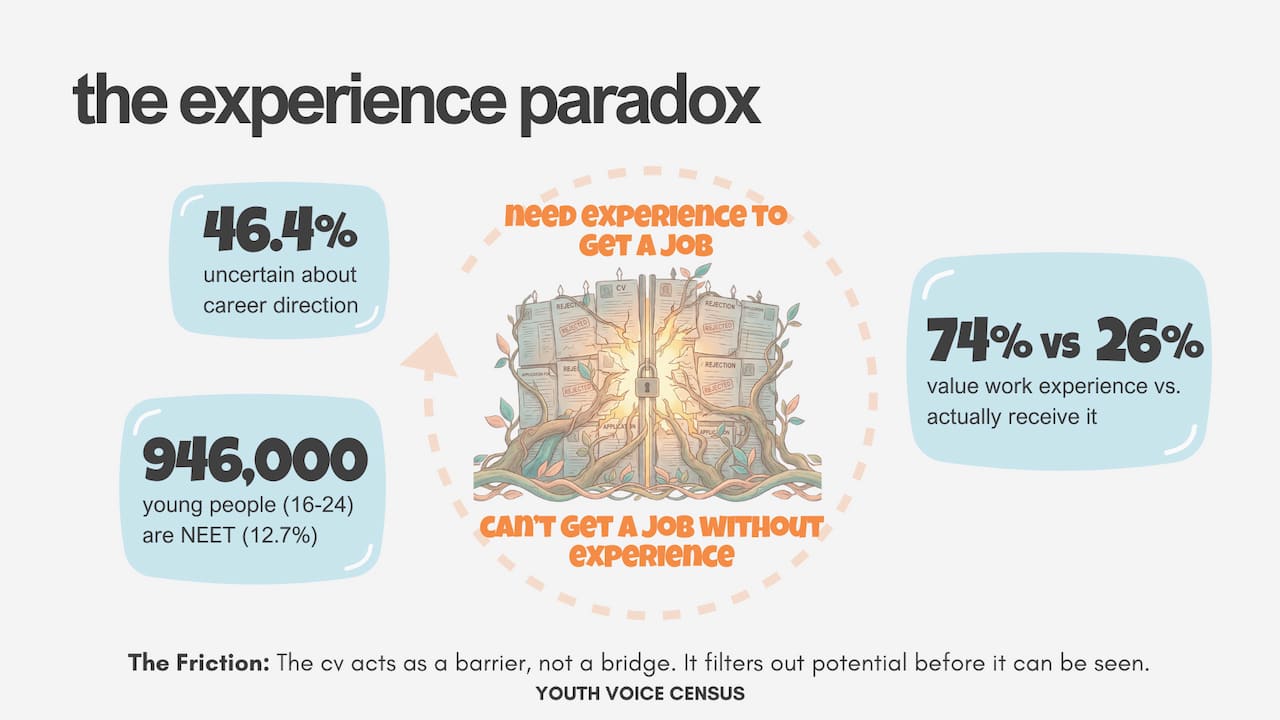
The Experience Paradox
Let’s start with the big one: “Experience required.” For entry-level jobs. For internships. Sometimes even for unpaid work. It’s the classic catch-22…how are you meant to get experience if nobody will give you a chance to gain it? According to the ONS, youth unemployment in the UK remains stubbornly high, and one of the top reasons young people cite for struggling to get hired is - you guessed it: lack of experience.
And yet, most people you talk to will admit they “fell into” their first job, or that their career path was anything but a straight line. So why do we keep pretending there’s a perfect formula?
“Just Follow Your Passion!” (But What If You Don’t Know What That Is?)
Another classic: “Do what you love and you’ll never work a day in your life.” The reality? Most of us have no idea what we want to do at 16, 18, or even 25. Passions change, and they rarely line up neatly with what’s available locally or what actually pays the bills. The pressure to have it all figured out is huge and frankly, unrealistic.
The First Years at Work: Not What You Expect
Here’s some real talk: your first years in work are rarely what you expect. You might land your “dream job” and find the day-to-day is nothing like you imagined. You’ll probably be ghosted after dozens of applications. You’ll realise that “entry-level” can mean “must be able to do the job of three people with zero training.” And you’ll discover that everyone, even your boss, is still figuring things out as they go.
The truth is, nobody tells you how much learning happens on the job or how much of your early career is about resilience, adaptability, and asking for help.
What’s Actually Missing?
So why is career advice failing young people? Here’s what’s missing:
- Honest, practical advice: Schools often focus on grades and university, but rarely on networking, negotiating, or bouncing back from rejection.
- Focus on strengths, not just CVs: Your unique strengths and personality matter far more than a list of qualifications or a “perfect” CV.
- Local, real opportunities: Most advice pushes big brands or traditional paths, but real growth often happens in smaller businesses that value your potential.
- Support and mentorship: Navigating your first years requires guidance, not just a list of job sites.
The Research Bit
- According to Youth Employment UK, over 60% of young people feel unprepared for the workplace, with many saying school didn’t equip them with practical skills.
- LinkedIn’s UK Workforce Report highlights that skills shortages are growing, especially in local SMEs - exactly where inyourroots® focuses.
- Our own early platform results show that strengths-based matching surprises candidates (in a good way!) and opens their eyes to roles they’d never considered.
The Hopeful Bit: Change Is Coming
The system isn’t perfect but it’s changing. The government are releasing new initiatives and platforms like inyourroots® are flipping the script with strengths-first matching career companions, and a focus on real, local opportunities. You don’t need a perfect CV or a five-year plan; you need a chance to show what you can do, and a community that’s got your back.
Want to find your strengths (not just your grades)? Sign up for early access here.
What’s the worst career advice you’ve ever received? Email us and let us know or share what you wish someone had told you before your first job. Let’s get honest about what young people really need to succeed.
Useful Links & Further Reading: