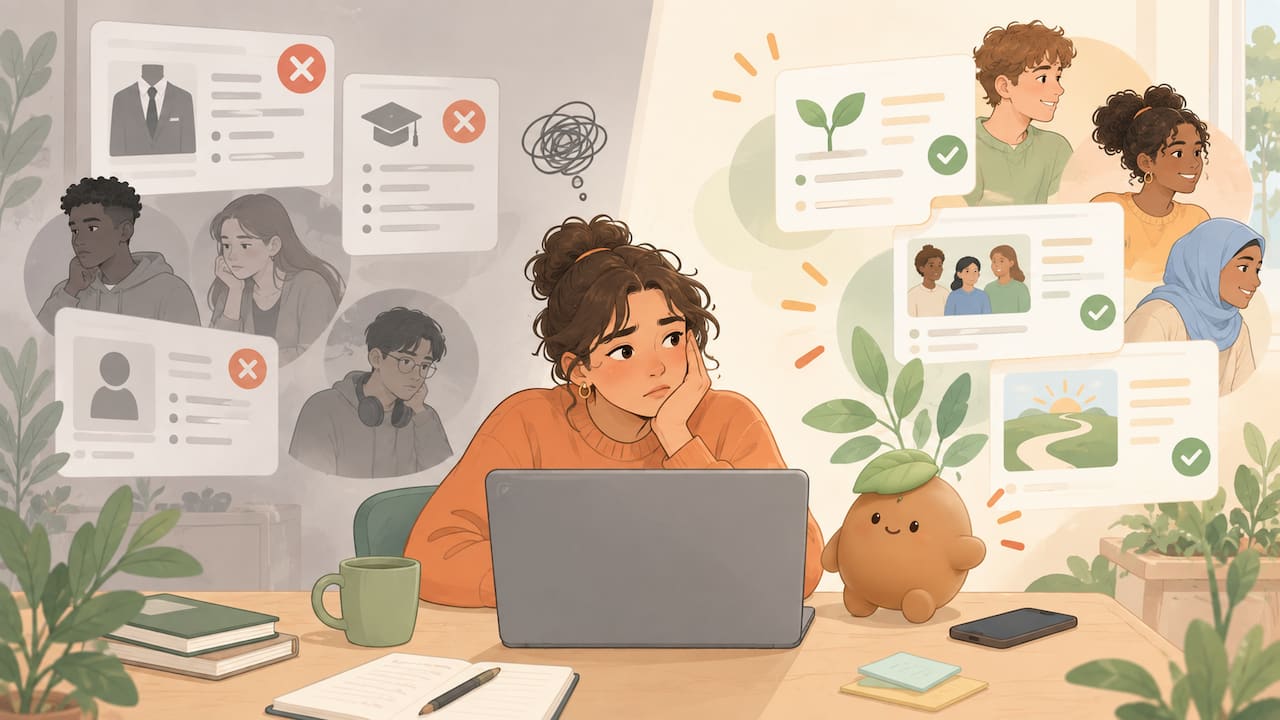
If you run a small business and you've struggled to get decent applications from young people, here's an uncomfortable number: only 18% of young people believe employers are supportive of hiring them. Nearly half - 47% - believe employers are actively unsupportive.
Those findings come from the Youth Voice Census 2026, the UK's largest survey of young people, run by Youth Employment UK with more than 11,500 responses.
The problem may be at the front door
Among young people already in work, 67% describe their employer as youth friendly and 83% feel able to raise concerns with their manager.
The experience often improves once young people arrive. What goes wrong may happen before anyone applies.
What's putting them off
The census asked young people who saw a job advert and chose not to apply why they didn't. The sample was small—144 people—so treat it as a signal rather than a precise measure, but the pattern is clear:
- 51% said the location wasn't right
- 49% said the role asked for higher qualifications than they had
- 46% said the person specification had too many requirements
They weren't rejected, because they never applied in the first place.
Meanwhile, only 28% of young people feel they have suitable work experience, even though most feel confident in teamwork, problem-solving, and listening.
You're asking for proof they haven't had the chance to collect, and they're taking you at your word.
Four fixes you can make this week
1. Cut the list to day one
Go through your requirements and ask of each one: “Do they need this on their first morning, or can I teach it by month three?”
Most small-business roles have two or three genuine essentials. List those and drop the rest.
2. Swap “experience required” for a strengths question
Try: “Tell us about a time someone relied on you.”
A young person can answer that whether they've had a formal job or not. It gives you evidence of reliability, communication, and judgement without making previous employment the price of entry.
3. Be plain about the practical details
Give the exact location, working hours, and transport options. Seventy-four per cent of young people want flexible hours, and nearly a third rate local transport reliability as poor.
In rural Essex and Suffolk, “Can I actually get there?” can decide more applications than salary. Say it up front.
4. Offer a paid taster day
Three quarters of young jobseekers say paid work experience is the thing that would most help them get into work, up from 55% last year.
A single paid day costs relatively little, lets you see how someone really works, and gives them the experience line they've been missing. Of the young people who have completed a placement, 72% rated it good or excellent.
One more line to add to your advert
“A real person reads every application.”
Seventy-two per cent of young people object to AI reading their application, and 76% object to AI making the hiring decision. For a small business, human review is a genuine selling point.
Getting them to stay
Hiring is only the first part of the job. Fifty-four per cent of young workers considered leaving in the past year, and 58% don't feel confident asking for a pay rise.
A ten-minute monthly check-in—where you raise pay, development, and progression before they have to—may do more for retention than any perk.
Where inyourroots® comes in
inyourroots® is building a local Ecosystem directory where small businesses can show what they're really like to work for and meet young people who already understand how they work best.
It's in beta, a profile is free, and we're looking for our first 100 local businesses to help shape it.
Show young people what your business is really like
Join the inyourroots® Ecosystem
Create a free profile and help us build a fairer route into local work.
Useful Links & Further Reading: